
Local Information
Zhang Jia Jie National Park
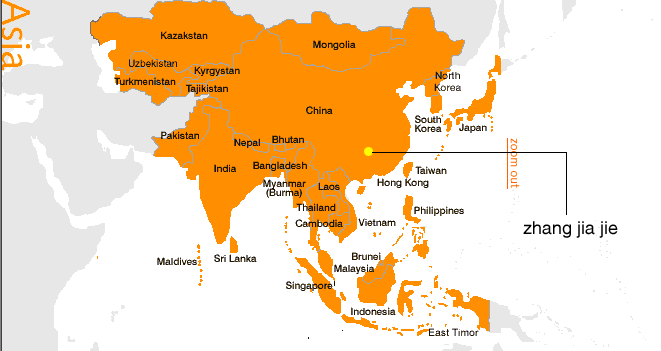
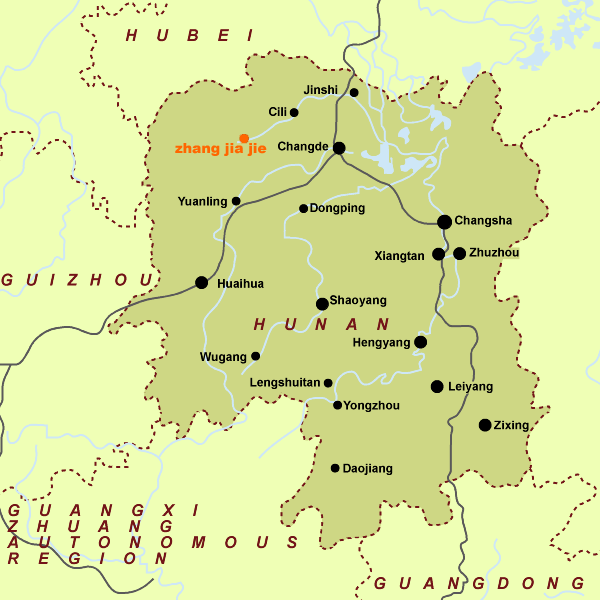
Zhang Jia Jie, famous for its unique natural scenery in China, is located in the northwest of Hunan province, about 400 kilometers away from Changsha, capital of Hunan, covering a total area of 9,563 square kilometers with 76% mountainous area. Zhang Jia Jie was listed in the World Natural Heritage Catalogue by the UNESCO in 1992, accredited the title of "World Geological Park's and honored as "Number-One Miraculous Mountain in the world" and "the Original Manuscript of Chinese Landscape Painting."
Geological Features:
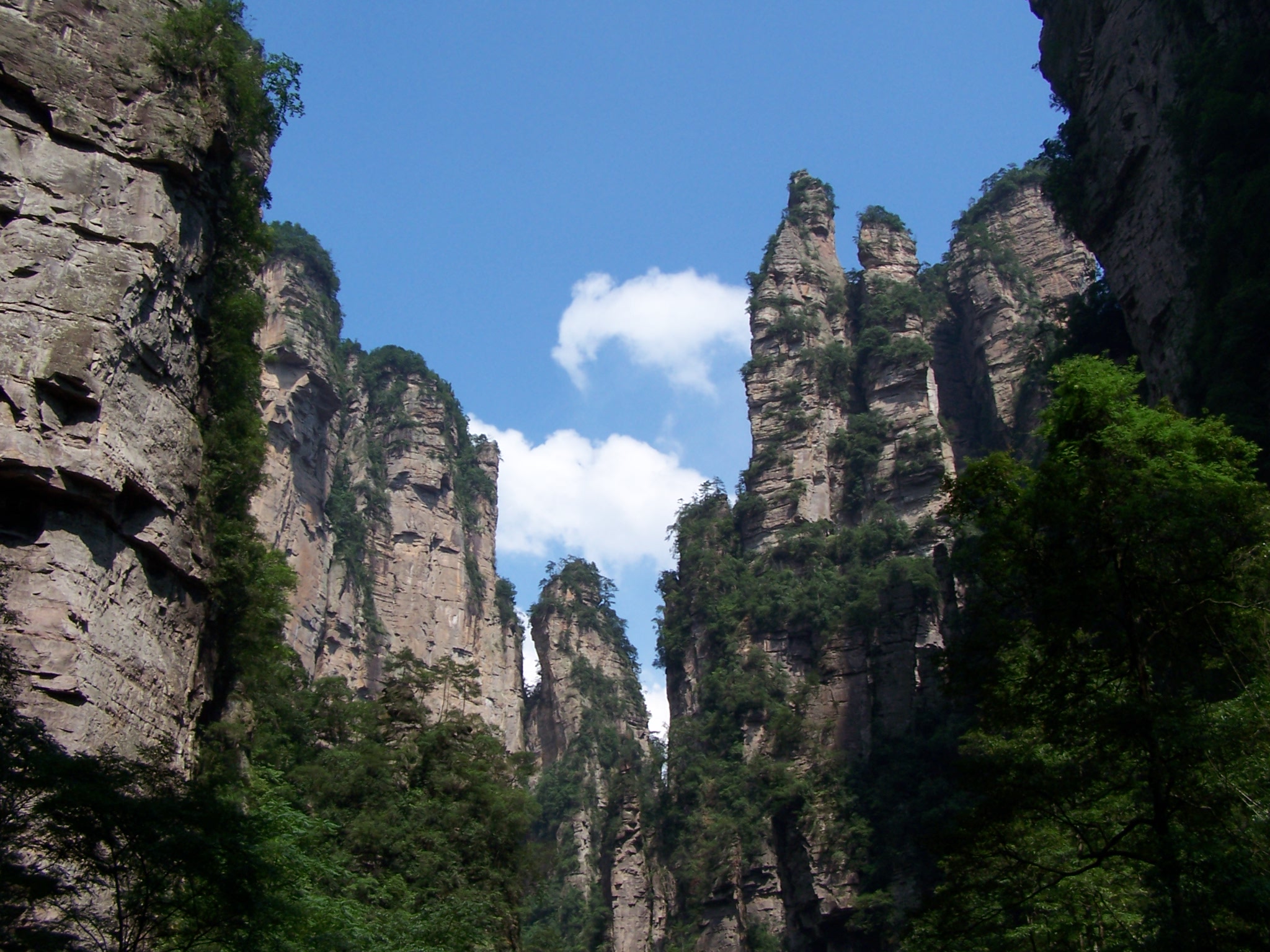
The geological formation of Zhang Jia Jie belongs to the New Cathaysian tectonic system. About three billion and eight thousand years ago, this place was a large patch of ocean. After a series of geological changes including Wuling-xuefeng, Indo-china, Yanshan, Himalayan and Neotectonic movements, the bottom of ocean rose out of the surface, and the quartzite sandstone pillars and peaks took shape after the gradual cutting, eroding and crumbling of Nature for millions of years.
The entire area is covered with towering cliffs of sandstone of quartz and dense unspoiled forests that conceal fantastic caves full of stalactites and stalagmites. The quartzite sandstone hills in Wulingyuan are unique in their large number and fairly pure composition (being 75-95% of quartz). With the changes of seasons and the weather, they constantly present different views to spectators. The highest peak in this area is Tuerwangyue Feng or Rabbit Watching the Moon Peak and Mt. Tianzi is particularly recommended for its good view.
 Qian Li Xiang Hui (long distance meeting between man and woman) |
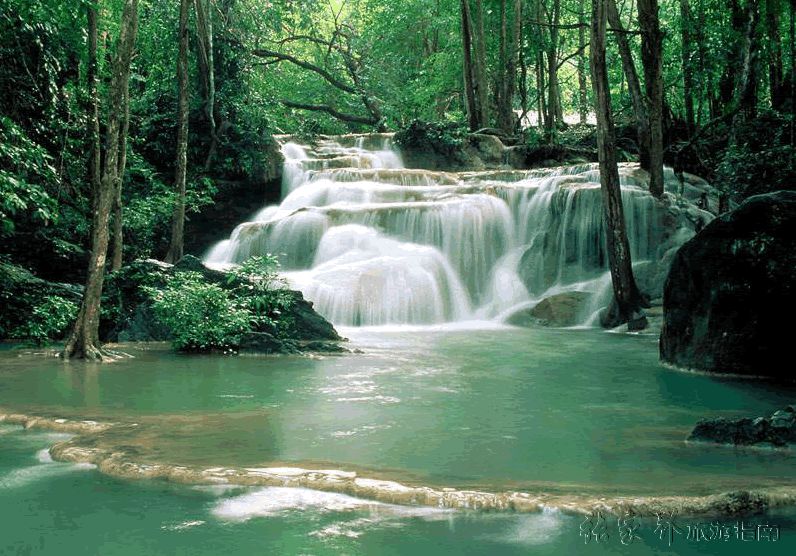 Maoyan River |
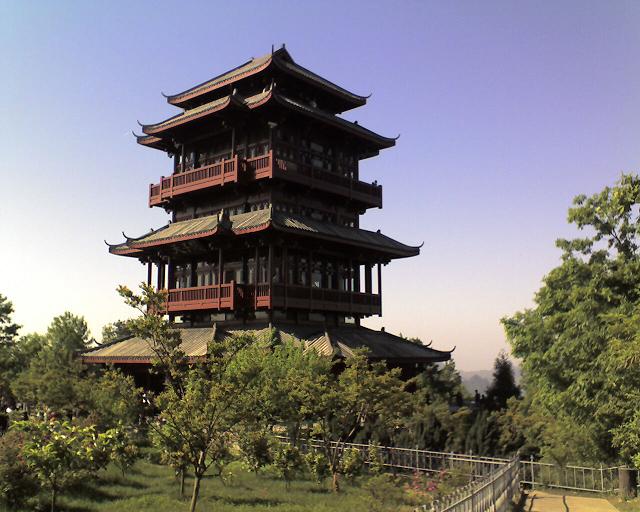 Tian Zi Ge (Heaven's Son Pavilion) |
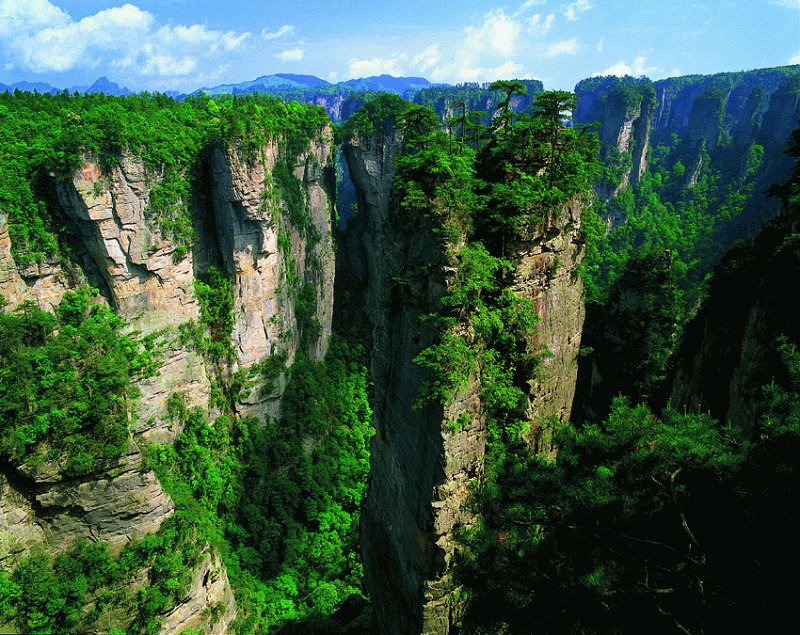 First Bridge in the World |
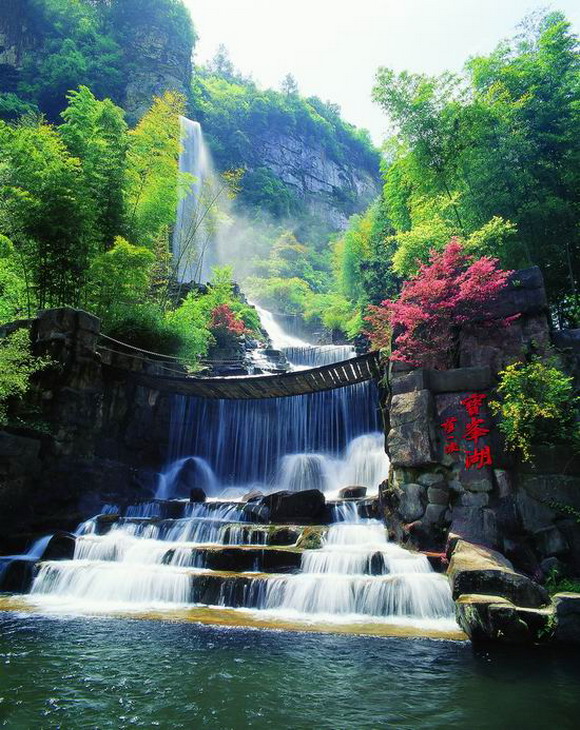 Baofeng Lake |
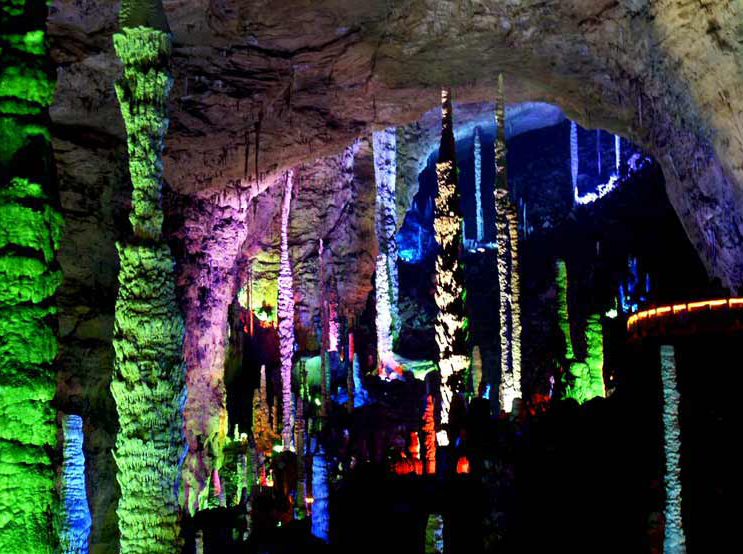 Baofeng Lake |
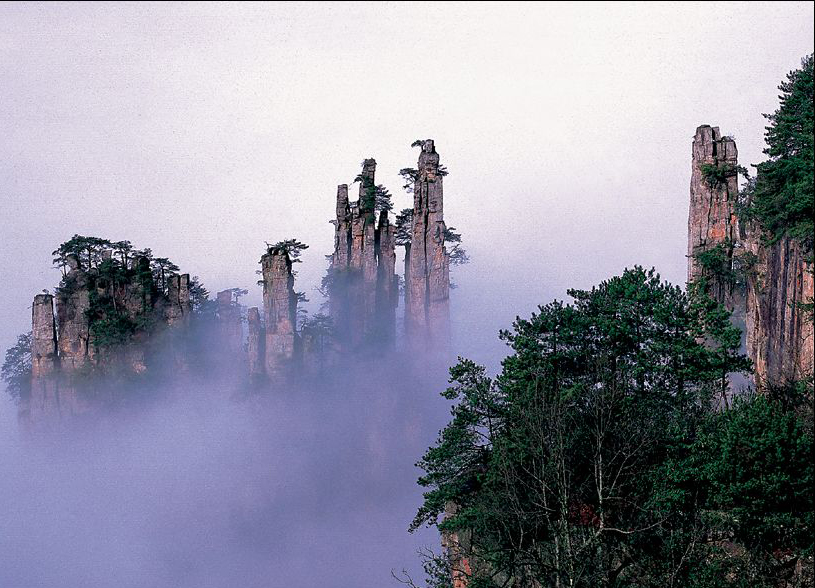 Yu Bi Feng (Imperial Brush Peak) |
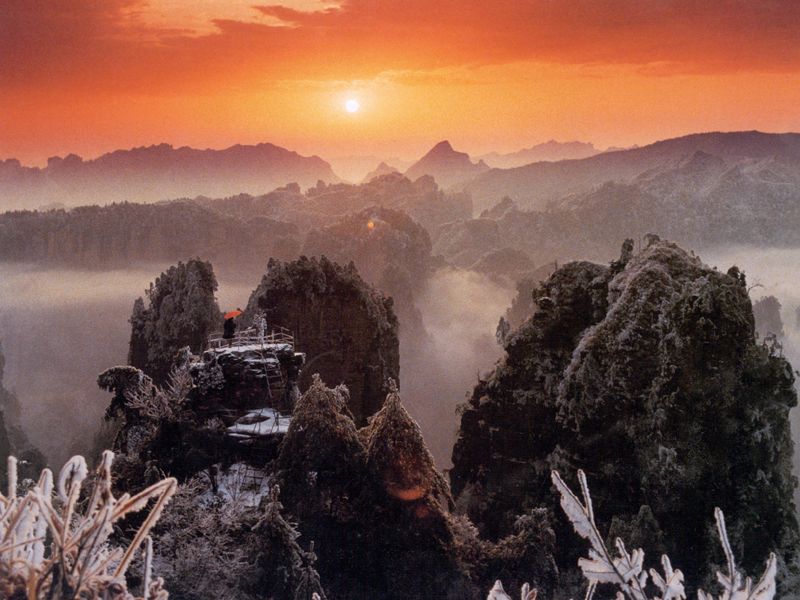 Jinbi Stream (Golden Whip Stream) |
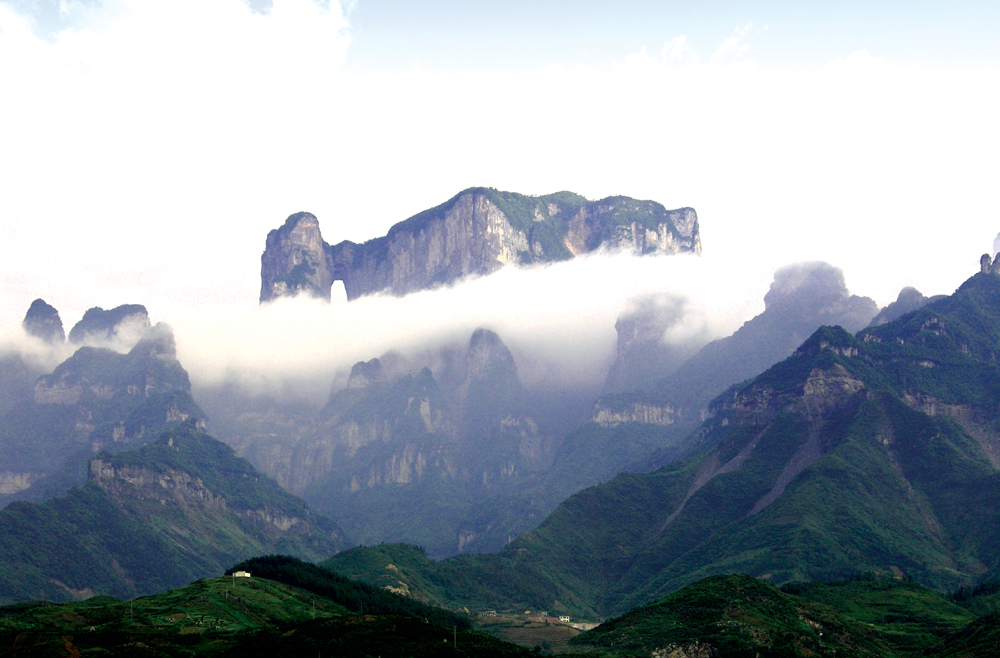 Tianmen Mountain |
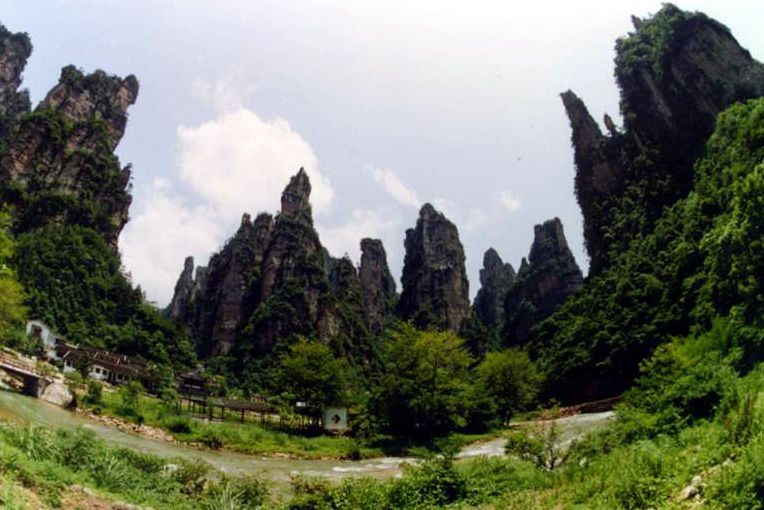 Shui Rao Si Men(water-surrounded gates)
 |
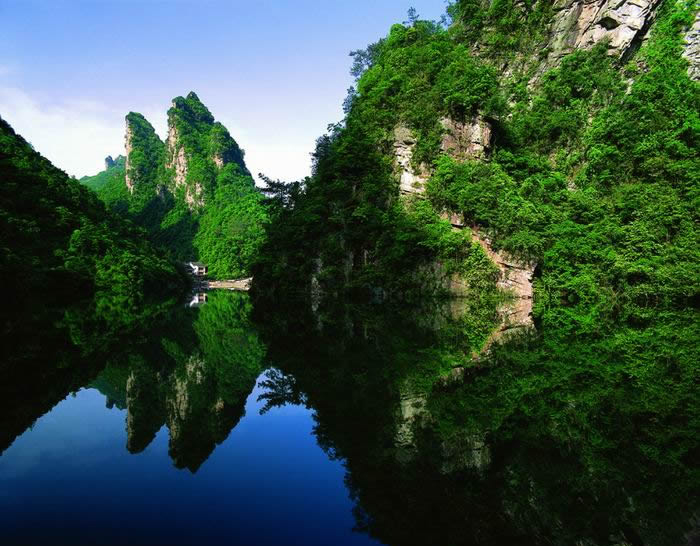 Baofeng Lake |
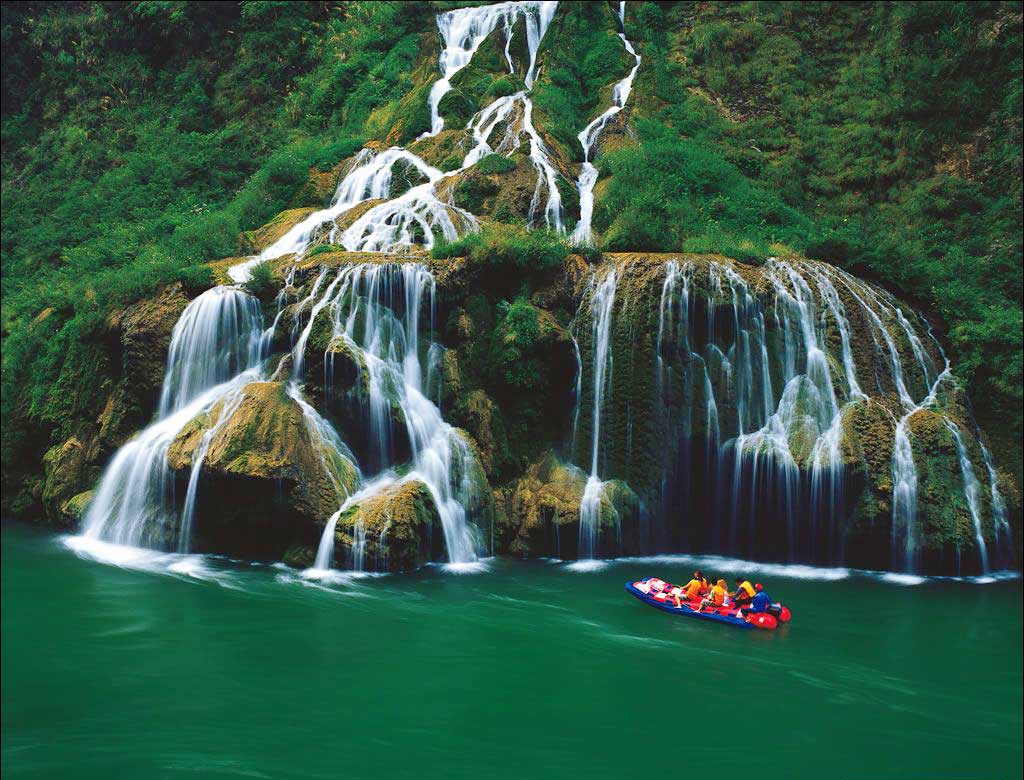 Maoyan River |
History and indigenous culture:
In ancient times, Zhang Jia Jie was regarded as remote and inaccessible. The earliest human activities can be traced to 100, 000 years ago and the legendary god of Agriculture was said to live a reclusive life here. Local story also indicates that Zhang liang, a lord in the Han Dynasty (206 BC-220 AD), lived here in seclusion and was buried below Qingyan (now Zhang Jia Jie) Mountain.
Zhang Jia Jie was formerly named Dayong city, founded in 1988.As Zhang Jia Jie National Forest Park is increasingly becoming known to world, Dayong city was renamed as Zhang Jia Jie city under the permission of the State Council in 1994. Now, Zhang Jia Jie has basically developed a large-scale, high-rank tourist resort where strange mountains, green lakes, deep caves, serene valleys and historical culture and special folk customs are well blended into a beautiful painting.
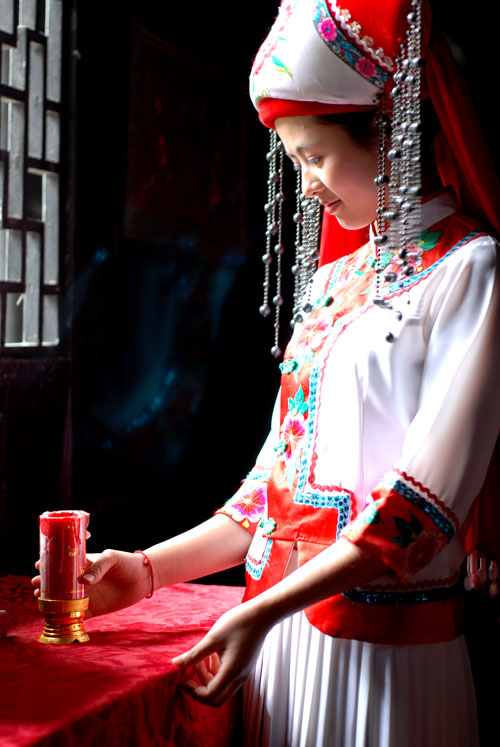
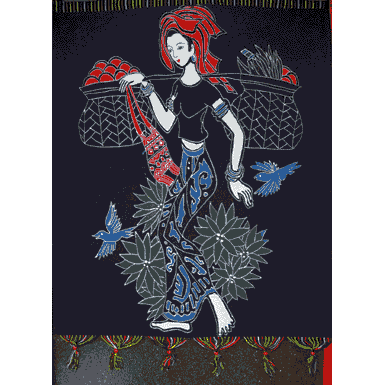
Zhang Jia Jie is home to major three ethnic groups, including Tujia, Bai and Miao people, which together make up approximately 70% of the local population. Up to now, these people still remain much of their traditional culture, including the language, festivals, clothing, and architectural styles as well. The long history of many minorities and their folk customs such as marriage custom, singing and dancing together with modern culture all contribute to the charm of Zhang Jia Jie. One thing is certain: All of these will give you a lasting memory.
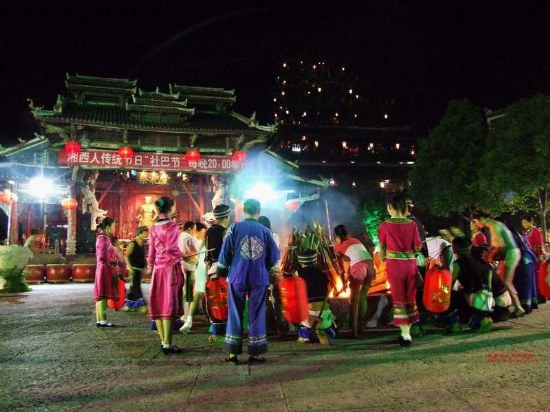 Folk dancing |
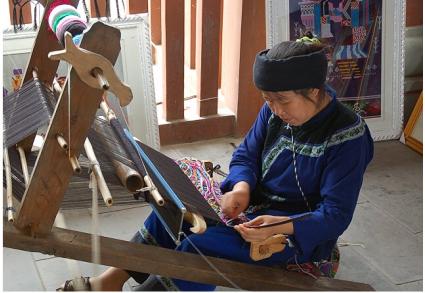 |
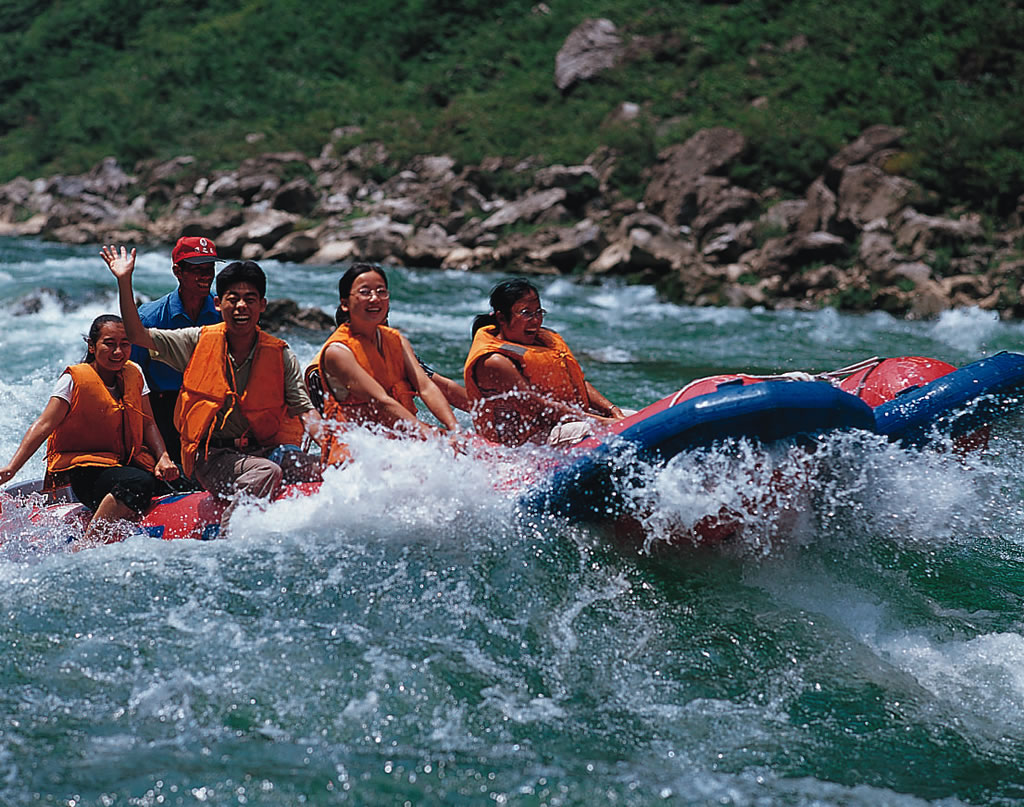 Drifting on Maoyan River |
 |
 |
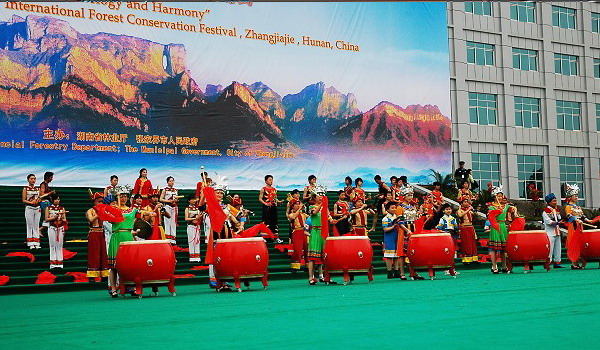 International Festival |
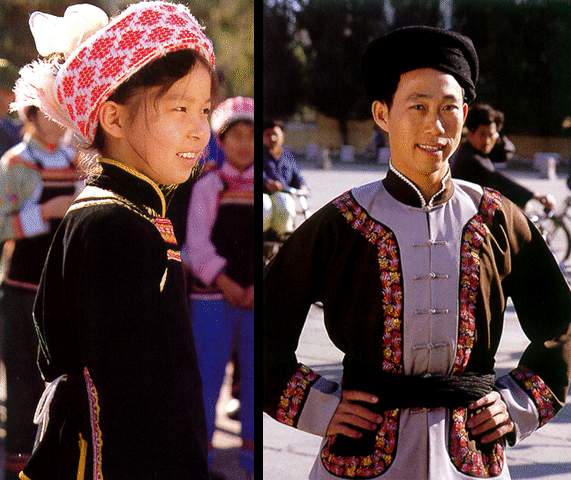 |
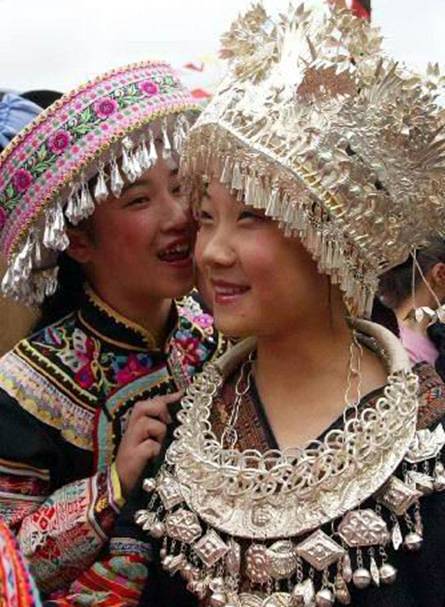 |
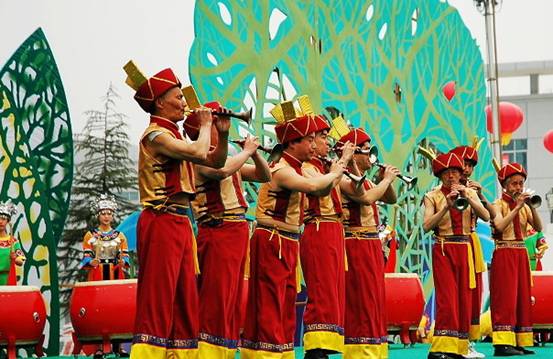 International Festival |
Note: The above description and pictures are copied from zhangjiajie.com.cn